.png)
Pressure Does NOT Make Diamonds; Empathy is King
- Laith (Leo) Khoury

- Dec 30, 2025
- 3 min read
Have you ever seen Mr. Olympia athletes?
The guys who look like they’re 99% muscle and 1% human.
Thanks to decades of sports science, we now know something important about how muscle actually grows. It’s not about destroying yourself. It’s not about breaking down muscle fibers through pain and punishment.
Growth happens when you train near failure, not past it.
The mechanism isn’t micro-tears.
It’s muscle recruitment.
Your body adapts by calling in more muscle fibers to handle the load. You get stronger not because you broke something, but because you pushed right up to the edge without crossing it.
That distinction matters.
Because there’s a massive difference between almost breaking and actually breaking.
And leadership often forgets that.
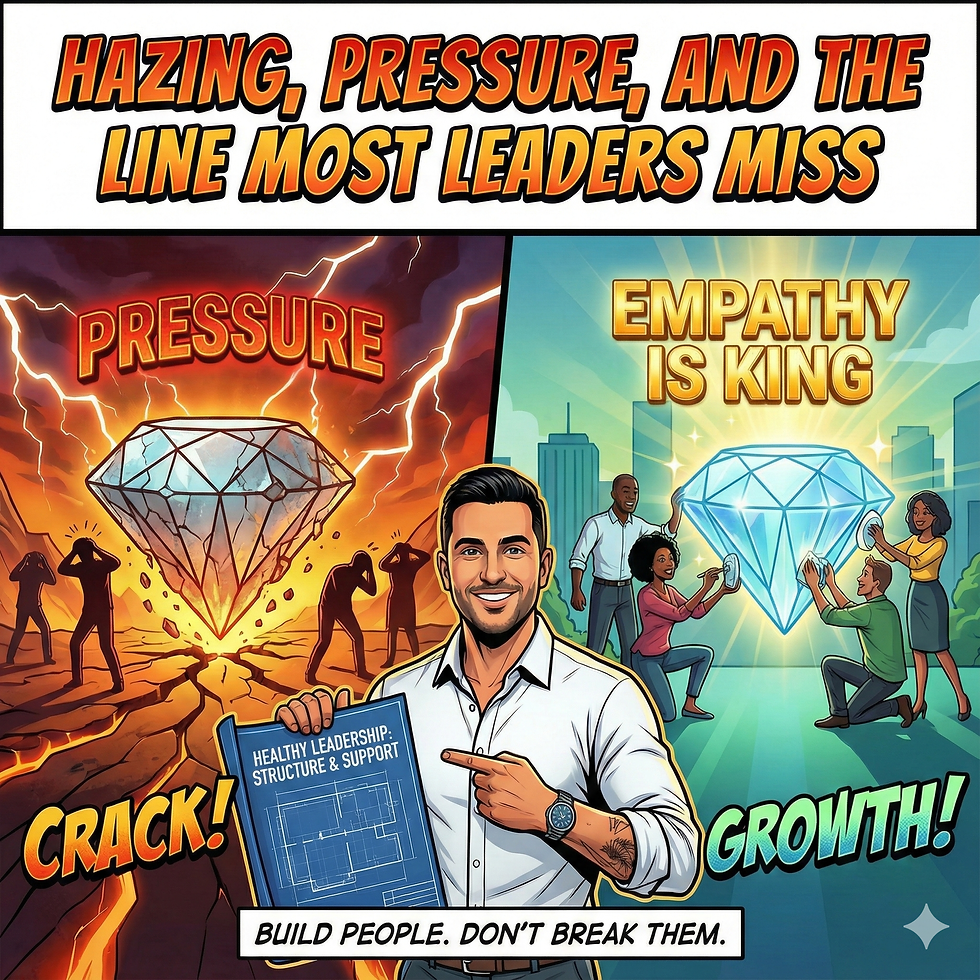
Hazing, Pressure, and the Line Most Leaders Miss

I spent years at Culver Military Academies, where pressure was not an accident. It was designed.
Hazing existed. Tough love was real. Standards were high. Expectations were unforgiving.
But here’s what most people don’t understand about environments like that:
There were systems.
There were checks and balances.
There were real consequences for crossing the line.
Senior cadets and officers who went too far didn’t get praised. They got stripped of rank, privileges, and authority. The institution understood something critical:
Pressure without control doesn’t build leaders; it creates damage.
The line was thin, but it was watched.
That’s the part most organizations forget when they romanticize toughness.
The Biopsychosocial Reality Leaders Ignore

When I studied psychology, the very first framework drilled into us was the biopsychosocial model.
Any serious assessment had to consider three layers at once:
Biological:
Genetics, health conditions, sleep, exhaustion, medications, and physical stress.
Psychological:
Trauma, flawed thinking patterns, anxiety, depression, ADHD, grief, identity stress.
Social:
Family dynamics, cultural expectations, financial pressure, workplace norms, community.
You don’t isolate one and ignore the rest.
You look for how they interact.
Here’s the leadership problem:
It’s easy to see when someone is physically tired.
It’s easy to notice when someone is socially isolated.
But psychological exhaustion!
That is invisible unless you are paying very close attention.
And most leaders aren’t.
Where “Pressure Makes Diamonds” Becomes Dangerous

First, lets set the record straight!
I believe in tough love.
I believe in accountability.
I believe in high standards.
But I also know this:
Pressure without empathy is not leadership. It’s negligence.
Everyone has a different breaking point.
Life doesn’t wait for performance reviews to pile on pressure. It comes in waves.
As Shakespeare put it in Hamlet:
“When sorrows come, they come not single spies, but in battalions.”
Deaths.
Divorces.
Medical diagnoses.
Financial losses.
Family conflict.
Your employee, your manager, or your successor might be carrying a full battalion into work, and saying nothing.
So when leaders try to “forge diamonds” without knowing what someone is already carrying, they don’t build resilience.
They push people over the edge.
What Healthy Leadership Actually Looks Like
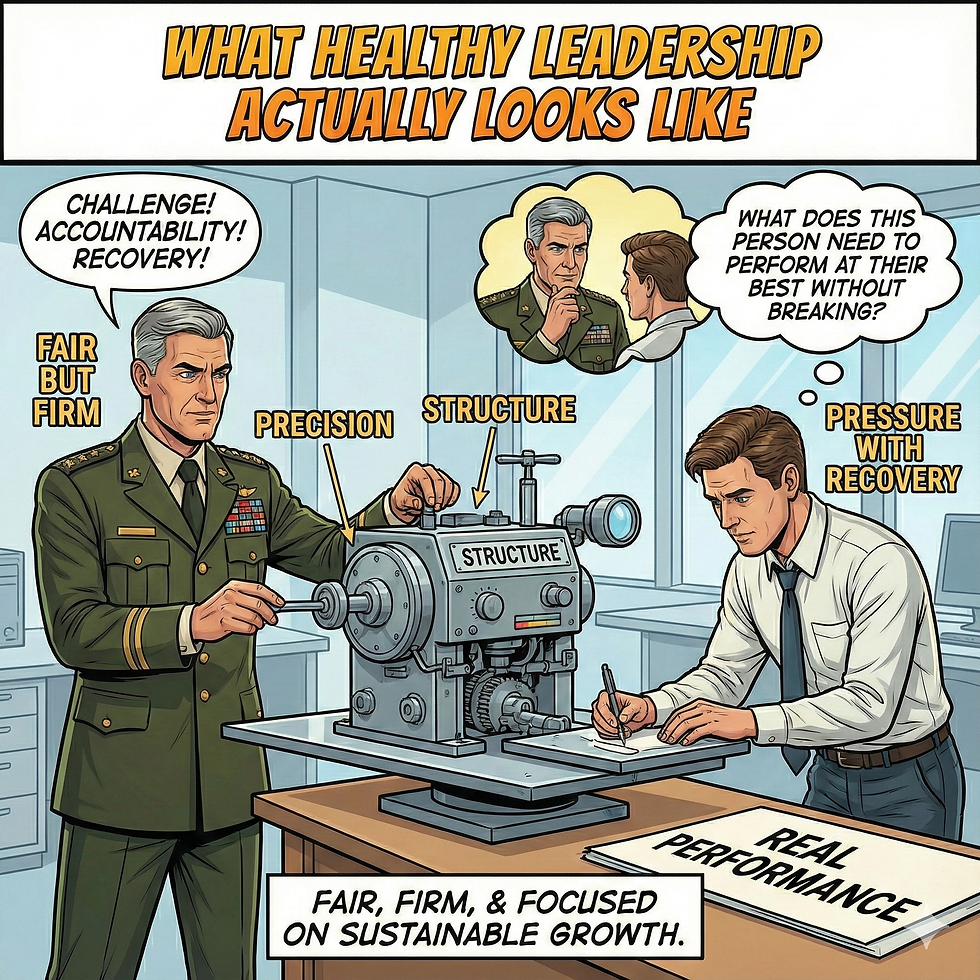
Healthy leadership is not softness.
It’s precision.
It means knowing when to push and when to stabilize.
When to challenge and when to protect.
When to demand more—and when “more” will break the system.
It is fair, but firm.
It has structure, not chaos.
Accountability, not fear.
Pressure with recovery, not endless strain.
The best leaders I’ve worked with don’t ask,
“How hard can I push this person?”
They ask,
“What does this person need to perform at their best without breaking?”
That’s where real performance lives.
Why This Matters to Leadership and Coaching
This is exactly why executive coaching exists.
Not to motivate.
Not to coddle.
Not to fix people.
But to help leaders see clearly, regulate pressure, and make better decisions under load.
I work with leaders because I’ve been in their seat.
I’ve lived inside pressure systems, I’ve seen what happens when empathy is missing, and I’ve seen what happens when it’s done right.
Pressure alone doesn’t make diamonds.
Pressure, paired with awareness, empathy, and structure, does.
And that difference decides whether leaders grow people…
or quietly burn them out.
If this resonates, that’s not an accident.
It usually means you’re carrying weight—and you’re trying not to drop it.
You can learn more about my executive coaching work at www.leokhoury.me.
No hype. No slogans. Just clarity, structure, and honest leadership conversations.

Signing Off!
Laith (Leo) Khoury [Connect on LinkedIn]
Family Business Advisor & Executive Coach
Founder, SpartanSC.co & LeoKhoury.me


Comments